
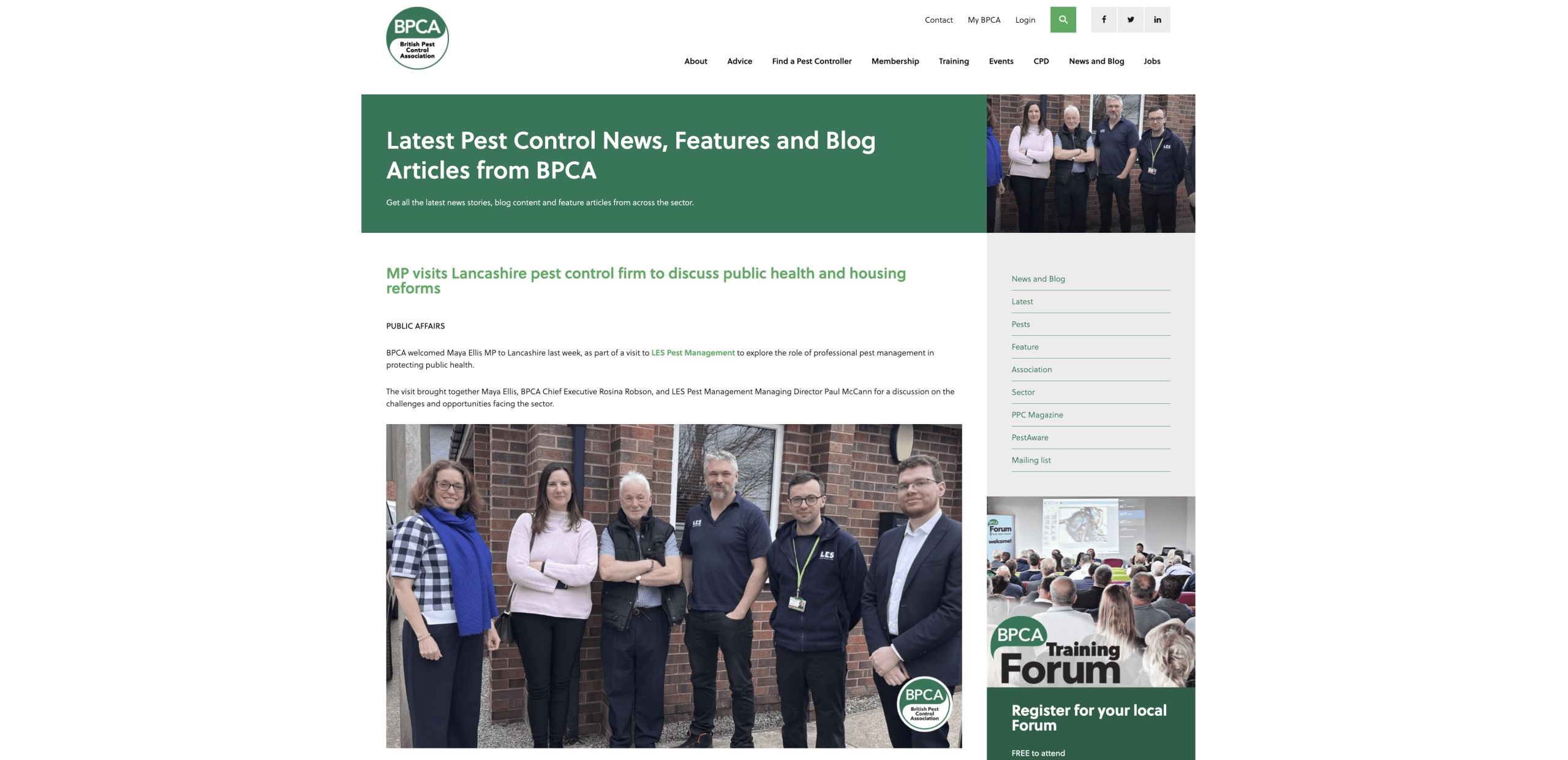
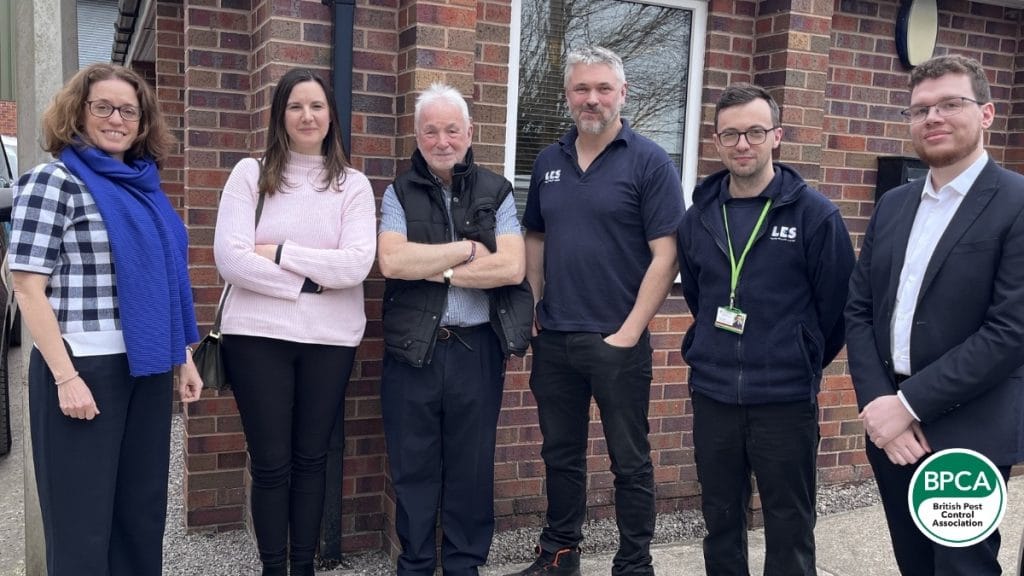
We were proud to welcome Maya Ellis, MP for Ribble Valley, to our base in Lancashire last month – a visit that gave us a rare and valuable opportunity to put pest management at the heart of a wider conversation about housing reform, public health, and the future of regulation in our industry.
Joining Paul McCann, Managing Director, and the wider LES team were Rosina Robson, Chief Executive of the British Pest Control Association (BPCA), and Ciaran Breen, BPCA Policy and Campaigns Officer. Together, we spent time walking Maya through what professional pest management actually looks like on the ground – and why it matters far more to people’s daily lives than is often recognised.
Why This Visit Matters to Us
LES Pest Management has been operating in Lancashire since the 1980s. In that time, we’ve grown and diversified significantly – from reactive callouts to a fully preventative approach built on our ‘Educate, Evaluate, Eradicate‘ philosophy. But despite the work we do protecting homes, schools, hospitals, and businesses across the region, pest management rarely makes it into political conversations about public health. This visit was a chance to change that.
As Paul McCann put it:
“This has been an excellent opportunity to show what professional pest management is really about – making sure that people can live safely, healthily, and comfortably within their community.”
The Role of Pest Control in Housing Reform
Maya Ellis sits on the Housing, Communities and Local Government Committee, which has been examining housing conditions across England. That made this conversation especially timely. Poor housing conditions and pest infestations go hand in hand – and with reforms such as Awaab’s Law now driving landlords and social housing providers to address damp, mould, and hazardous conditions more urgently, pest control is increasingly part of that conversation.
Awaab’s Law, which sets strict timescales for landlords to investigate and fix reported health hazards in rented homes, is a significant step forward for tenants across England. At LES, we regularly work with housing providers to help them meet their obligations – whether that’s identifying pest entry points during inspections, providing documented treatment records, or advising on proofing solutions that prevent infestations from taking hold in the first place.
Maya Ellis noted:
“Lancashire Environmental Services plays a vital role in keeping businesses open and protecting public health… it was interesting to hear how they’re challenging negative perceptions of pest control through investment in the professional development of their staff and in educating the public on the importance of prevention rather than cure.”
That last point means a great deal to us. At LES, we’ve always believed that pest management is ultimately a preventative discipline – and that’s what we want to be known for.
What We Want Government to Understand About Our Sector
The visit also gave BPCA the opportunity to raise several important policy priorities with Maya Ellis. As a BPCA member, we fully support these calls:
Stronger protections for householders. Whether through the expansion of Awaab’s Law or wider housing standards reform, tenants and homeowners deserve assurance that pest-related health risks will be taken seriously and addressed promptly.
Smarter chemical regulation. The regulatory landscape for pest control products continues to evolve. Professional operators like LES need workable, evidence-based rules that allow us to do our jobs effectively while maintaining the highest standards of safety and environmental responsibility.
Restricting access to professional-use products. When rodenticides and other professional-grade treatments are available without restriction, it undermines both public safety and the case for using trained pest controllers. Limiting access to qualified professionals raises standards across the board.
Promoting the TrustMark scheme. LES Pest Management is TrustMark registered – a scheme that gives consumers confidence they’re working with vetted, professional businesses. Wider awareness and promotion of this kind of accreditation helps protect the public from unregulated operators.
Proud to Represent the Industry
We’re grateful that Maya Ellis took the time to visit and engage with these issues directly. As Rosina Robson from BPCA reflected:
“We are proud of all of our members, including LES Pest Management, and the vital services they provide to their local communities, protecting public health.”
Moments like this remind us why it matters to be BPCA members, to invest in our team’s professional development, and to engage with the broader standards conversation. The more policymakers understand what responsible pest management involves – the training, the regulation, the genuine public health impact – the better placed they’ll be to support an industry that protects millions of people every year.
What This Means for Our Clients
For our commercial and residential clients across Lancashire and Greater Manchester, this kind of engagement is reassuring. It signals that the regulatory framework around pest management is being shaped by people who understand what good practice looks like — and that businesses like ours, who invest in training and professional standards, are at the table when those conversations happen.
If you’re a landlord, housing association, or business owner wanting to make sure your pest management strategy is compliant, proactive, and built to last, we’re here to help.
Get in touch with the LES team on 01772 885 100 or visit our commercial pest management page to find out more.
LES Pest Management is a BPCA member and TrustMark registered pest control company based in Preston, Lancashire, serving businesses and residents across the North West.
View LES Pest Management in the recent article on BPCA
Related reading:


What do our customers have to say…?


Educate – Evaluate – Eradicate

